





Infrastructure is the quiet force that underpins successful real estate markets. In Ras Al Khaimah, targeted investment in transport, utilities, and community facilities is playing a central role in shaping the emirate’s property landscape. As RAK positions itself as a serious contender for both regional and international investors, its infrastructure development strategy is proving critical in unlocking new residential zones, supporting tourism, and attracting long-term residents.
Transport Links: Building Connectivity
Improved road and transport connectivity is among the most visible contributors to RAK’s real estate momentum.
- Upgraded arterial roads such as Sheikh Mohammed bin Zayed Road and Emirates Road have dramatically reduced travel time between Ras Al Khaimah and Dubai, turning the emirate into a feasible commuter hub for those working in the larger city.
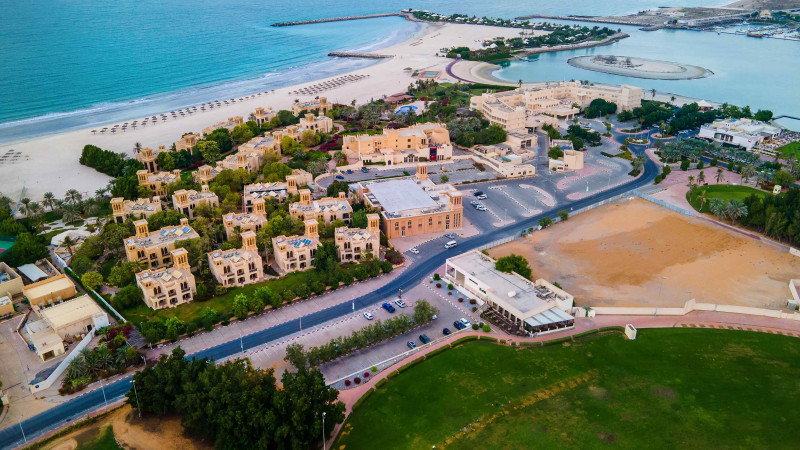
- Internal road improvements within key residential areas—particularly Al Hamra Village, Mina Al Arab, and Al Marjan Island—have enhanced access and mobility.
- RAK Ring Road has further streamlined travel across the emirate, easing congestion and opening up previously less accessible land for development.
Plans for a future railway connection through the Etihad Rail project, linking RAK with other emirates and eventually to Saudi Arabia, are expected to bolster both residential and industrial property values. Even in its early stages, the rail link is generating confidence among long-term investors.
Utilities and Smart Infrastructure
The expansion of core utilities has kept pace with real estate development, a key requirement for sustainable growth.
- Power and water distribution have been upgraded across RAK’s freehold zones, with the Federal Electricity and Water Authority (FEWA) expanding capacity in line with residential and commercial demand.
- Telecommunications infrastructure, including high-speed internet access, is being embedded into new developments from the outset—essential for both remote workers and international residents.
- Smart city features, such as remote utility metering and digital community management tools, are increasingly common in master-planned communities.
These infrastructure upgrades improve not only daily living standards but also the attractiveness of properties for both owner-occupiers and tenants.
Education, Healthcare, and Community Facilities
Residential demand depends as much on social infrastructure as on physical networks. RAK’s government has made strategic investments in public services to support its growing population.
- Schools: International and private schools are expanding in areas with rising family populations. Al Hamra and Mina Al Arab now host a selection of British and Indian curriculum schools, with more expected as communities expand.
- Healthcare: Major hospitals such as RAK Hospital and Saqr Hospital have improved both capacity and quality of care, while private clinics are growing within residential developments.
- Recreation: Parks, fitness centres, and walking trails have been integrated into newer developments, contributing to the overall liveability of the emirate.
These amenities support longer-term residency and appeal particularly to families and retirees seeking a lifestyle alternative to Dubai.
Tourism Infrastructure and Its Real Estate Impact
Tourism and hospitality infrastructure is a major growth driver for Ras Al Khaimah, and its effects spill over directly into the real estate sector.
- Al Marjan Island continues to expand with the construction of luxury resorts and branded residences. The upcoming Wynn resort—set to open in 2027—is expected to attract global visitors and significantly increase regional visibility.
- Jebel Jais, the UAE’s highest peak, has become a focal point for adventure tourism, supported by new visitor centres, mountain lodges, and access roads.
- RAK International Airport is undergoing modernisation to increase passenger handling capacity and improve international connectivity, which supports both tourism and expatriate relocation.
These projects have a dual benefit: they stimulate employment and business opportunities while creating demand for both residential and investment properties.
Industrial and Economic Infrastructure
RAK’s industrial backbone, led by the Ras Al Khaimah Economic Zone (RAKEZ), is also expanding its reach.
- Warehouse and logistics infrastructure is being developed to support manufacturing and trade, particularly near the airport and port facilities.
- Worker housing and mid-income developments are growing in tandem, driven by increased industrial activity.
- Free zones and business parks continue to attract SMEs and multinational firms, boosting demand for rental apartments in nearby areas.
As employment nodes grow, residential development follows, with developers targeting both the investor and end-user segments.
Long-Term Planning and Governance
Unlike some more reactive real estate markets, Ras Al Khaimah’s infrastructure expansion has been anchored in long-term urban planning. The RAK Municipality and Department of Public Works and Services are implementing structured zoning and phased infrastructure roll-outs, ensuring that development aligns with capacity and sustainability goals.
This level of planning reduces the risk of oversupply or under-served communities—an important signal for risk-conscious property investors.
Infrastructure investment in Ras Al Khaimah is doing more than supporting daily life—it is actively shaping the emirate’s real estate future. From improved highways and reliable utilities to world-class tourism facilities and economic free zones, every aspect of the built environment is reinforcing RAK’s value as a place to live, invest, and grow.
For buyers and developers alike, the message is clear: infrastructure is not a background consideration—it’s a primary driver of property potential in one of the UAE’s most strategically evolving markets.