





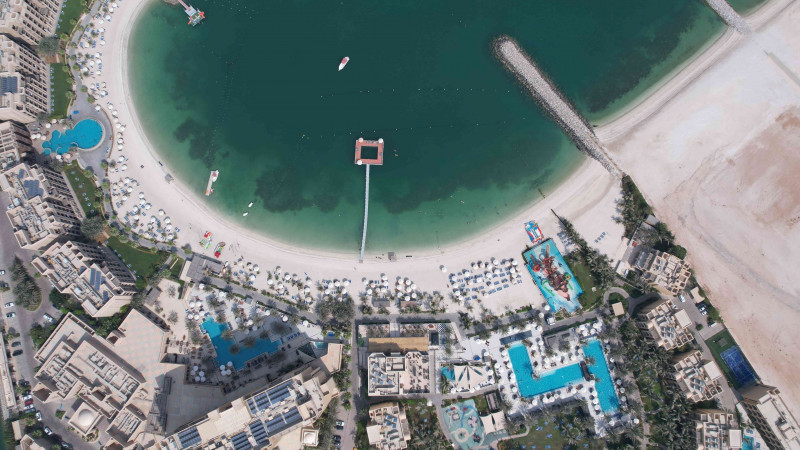
Introduced to attract long-term talent, investors, and entrepreneurs to the United Arab Emirates, the Golden Visa has become a cornerstone of the country’s residency strategy. While much of the early focus centred on Dubai and Abu Dhabi, Ras Al Khaimah (RAK) is now increasingly benefitting from the scheme’s appeal. The Golden Visa is shaping investment behaviour, driving demand for qualifying properties, and encouraging longer-term residency in RAK.
What Is the UAE Golden Visa?
The UAE Golden Visa allows foreign nationals to live, work, and study in the UAE without the need for a local sponsor. Valid for five or ten years (and renewable), the visa is available to investors, entrepreneurs, highly skilled professionals, and property owners who meet certain eligibility criteria.
For property investors, the key requirement is ownership of real estate worth at least AED 2 million, either through one or multiple properties. The property must be held without mortgage (or meet specific loan-to-value conditions), and must be retained for the duration of the visa.
Why Ras Al Khaimah?
RAK presents an attractive option for Golden Visa applicants for several reasons:
- Lower property prices compared to Dubai and Abu Dhabi make it easier to meet the investment threshold.
- Freehold ownership is available to foreigners in designated areas such as Al Marjan Island, Mina Al Arab, and Al Hamra Village.
- High quality of life and infrastructure improvements support long-term residency, especially for families and retirees.
- Proximity to Dubai, without the associated cost of living or congestion, enhances its appeal.
In effect, the Golden Visa has aligned well with RAK’s position as a more affordable, lifestyle-focused destination within the UAE.
Changing Buyer Behaviour
The Golden Visa has noticeably influenced the type of buyers entering Ras Al Khaimah’s market. Rather than speculative investors or short-term flippers, the scheme attracts end-users and long-term investors looking for residency benefits.
- Family buyers are purchasing larger homes in coastal communities, seeking security and a suitable environment for raising children.
- Remote professionals are investing in apartments, attracted by the flexibility to work from anywhere while enjoying UAE residency.
- International retirees are using the visa as a route to settle in the UAE with minimal bureaucratic barriers.
As a result, demand is rising for properties that not only meet the investment threshold but also deliver on liveability, convenience, and long-term value.
Impact on the Property Market
The Golden Visa has added a new layer of stability to RAK’s real estate sector:
- Increased transaction volume: Particularly in the AED 2–4 million segment, where eligibility for the visa becomes a key consideration.
- Longer holding periods: Visa-linked ownership reduces rapid turnover, improving market maturity and price stability.
- Reduced vacancy rates: Buyers eligible for the visa are more likely to occupy or actively manage their properties, contributing to community development.
Developers are also responding by tailoring unit sizes, pricing, and marketing strategies to align with visa-related thresholds.
Risks and Caveats
While the Golden Visa presents clear advantages, buyers should be aware of regulatory and financial considerations:
- Eligibility requires direct ownership; properties under construction or heavily mortgaged may not qualify.
- Visa benefits do not automatically extend to all family members unless specified in the application.
- Holding period requirements mean investors must retain the property, limiting flexibility.
Applicants should work with licensed real estate professionals and immigration consultants to ensure all criteria are met and properly documented.
Opportunities for Investors
For those considering entering the RAK market with Golden Visa eligibility in mind, several strategies may prove effective:
- Consolidating investments: Buying multiple smaller units that collectively meet the value threshold can offer rental diversification.
- Prioritising liveable communities: Properties in areas with schools, healthcare, and retail amenities are more attractive for long-term residents.
- Focusing on completed properties: These carry less delivery risk and are more likely to qualify under current visa regulations.
With the right due diligence, the visa can serve as both a residency vehicle and a property investment strategy with long-term upside.
The UAE’s Golden Visa has become a powerful tool for attracting serious, long-term investors to Ras Al Khaimah. It has helped reposition the emirate not only as a viable alternative to the larger property markets of Dubai and Abu Dhabi but as a destination in its own right for residency, lifestyle, and security.
As the scheme continues to evolve, its impact on RAK’s real estate market is likely to deepen. Buyers who understand the visa’s mechanics and align their investments accordingly are well-placed to benefit through property appreciation, enhanced mobility, stability, and opportunity.